Jadau vs Kundan vs Polki: What Is Actually the Difference?
Jadau, Kundan, and Polki are used interchangeably in every bridal jewellery conversation — but they mean very different things. One is a stone, one is a setting technique, one is an entire craft tradition. Here is the definitive guide.

Walk into any bridal jewellery showroom in India and you will hear these three words used almost interchangeably. They are not the same thing. Confusing them is not just a matter of vocabulary — it is the difference between buying a piece worth ₹8,000 and one worth ₹8,00,000, without knowing why. This guide settles it clearly, once and for all.
The short version: Polki is a stone. Kundan is a setting technique. Jadau is an entire craft tradition. Each one plays a different role in making the jewellery you love. Read on to understand exactly how they relate — and how to use that knowledge when you shop.
What Is Polki Jewellery?
Polki refers to uncut, raw diamonds that are used in traditional Indian jewellery. Unlike the brilliant-cut diamonds in modern solitaires, Polki stones are not faceted. They are simply cleaned, shaped into a flat base, and used as-is — which means each stone is completely unique, retaining its natural texture and light-scattering properties.
There are two kinds of Polki in the market today:
- Syngandhi Polki — genuine uncut natural diamonds. These hold intrinsic gemstone value independent of the jewellery piece.
- Syndicate Polki (Vilandi) — man-made glass or lab-processed stones that mimic the look of natural Polki at a fraction of the cost. The majority of "Polki" jewellery sold at accessible price points uses Vilandi, not real diamonds.
When a jeweller says "Polki set," ask directly whether the stones are Syngandhi (natural) or Syndicate (glass). A genuine Polki bridal set with natural diamonds is among the most expensive jewellery you can buy in India. A Syndicate Polki set is beautiful, but carries no diamond value.
Key fact: Polki is a stone. It does not tell you anything about the setting technique or the metal used around it.
What Is Kundan Jewellery?
Kundan refers to a stone-setting technique, not a stone or a style. In the Kundan method, gemstones (natural or glass) are set into a gold frame using highly refined 24-karat gold foil — called Kundan — as the adhesive. A thin sheet of silver foil is placed beneath the stone to maximise light reflection, and then the 24-karat gold is hammered around the stone to grip it in place.
The result is that characteristic rich, almost liquid-gold look where the stone appears to be floating in a bed of pure gold. The technique originated with Mughal court jewellers and is still practised by master artisans in Jaipur today.
Kundan is a technique, which means:
- A Polki stone can be set in Kundan style → that is a Polki-Kundan piece
- A glass stone can be set in Kundan style → that is a Kundan piece with glass (no diamond value, but beautiful)
- Emeralds, rubies, and other gemstones can be set in Kundan → gemstone Kundan jewellery
Kundan jewellery from Jaipur is widely considered the finest in the world. The concentration of trained artisans — stone cutters, gold framers, and enamel workers — who have spent their lives in this single tradition is irreplaceable. Browse Rangtarini's handcrafted Kundan collection to see modern interpretations of this centuries-old technique.
What Is Jadau Jewellery?
Jadau is not a stone or a setting technique — it is a complete craft tradition rooted in Rajasthan, and specifically Jaipur. The word itself derives from jad, meaning "to embed."
A genuine Jadau piece is defined by one feature that distinguishes it from all imitations: meenakari enamel work on the reverse side. The front of the piece carries the stone-set face. The back carries intricate enamel work — miniature flowers, vines, peacocks, or geometric patterns fired directly into the gold in vibrant colours. A true Jadau piece is as considered on the back as it is on the front.
This is important: all Jadau uses the Kundan setting method, but not all Kundan work is Jadau. A Kundan piece without reverse meenakari is simply a Kundan piece. A piece with both Kundan setting on the front and meenakari on the back is a true Jadau piece.
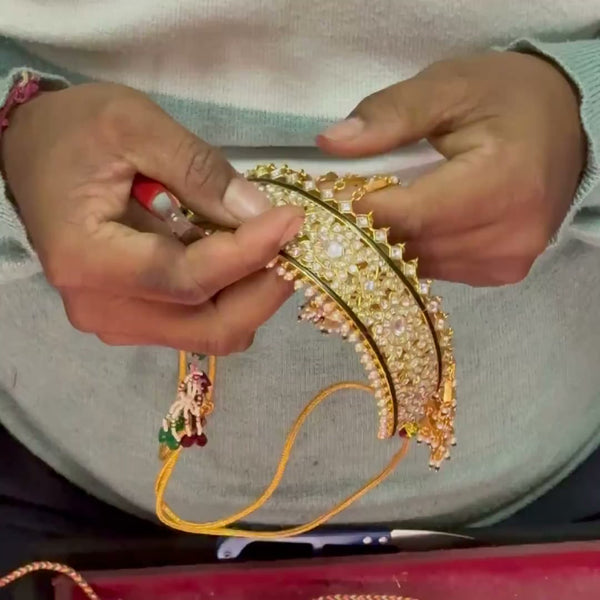
The Jadau process involves up to 15 distinct stages handled by different specialist craftspeople:
- Ghadayi — creating the gold framework (the ghat) by shaping 22-karat gold strips
- Khudayi — engraving patterns on the front and back of the framework
- Meenakari — filling the engraved surface with coloured enamel and firing it
- Jadai — the final stone-setting, where gold foil is hammered around each stone using the Kundan technique
- Pakayi — polishing and final finishing
Each of these stages requires years of apprenticeship. A single complex Jadau necklace can take weeks to complete. See Rangtarini's Jadau Kundan collection — each piece is handcrafted by artisans in Rajasthan using these traditional methods.
Jadau vs Kundan vs Polki — The Differences at a Glance
| Feature | Polki | Kundan | Jadau |
|---|---|---|---|
| What it is | A stone (uncut diamond) | A setting technique | A complete craft tradition |
| Origin | Natural diamond mines | Mughal court artisans, perfected in Jaipur | Rajasthan (principally Jaipur) |
| Defining feature | Raw, uncut, flat-based diamond — each unique | 24-karat gold foil used to grip stones into a gold frame | Kundan setting on front + meenakari enamel on reverse |
| Can they overlap? | Yes — Polki stones are often set using the Kundan technique | Yes — Kundan is the technique used in Jadau | Yes — Jadau includes Kundan and often Polki |
| Intrinsic stone value? | Yes (natural Syngandhi) / No (Syndicate/glass) | Depends on the stone used, not the technique | Depends on the stone used |
| Most valuable form | Natural Syngandhi Polki in gold | Polki stones in a Kundan set with natural gems | Polki-set Kundan with natural gems + authentic meenakari |
Which Is More Expensive — Polki, Kundan, or Jadau?
Price depends on what the piece is actually made of, not what it is called. Here is a rough hierarchy:
Most expensive
A Jadau bridal set featuring natural Polki diamonds, genuine coloured gemstones, 22-karat gold, and authentic reverse meenakari work. This is the complete expression of the Jaipur jewellery tradition. A full bridal set can run into several lakhs or more.
Mid-range
Kundan pieces set with semi-precious stones (emerald, ruby, tourmaline) in 22-karat gold with meenakari. Exceptional craftsmanship and heritage value, without the cost of natural diamonds.
Accessible luxury
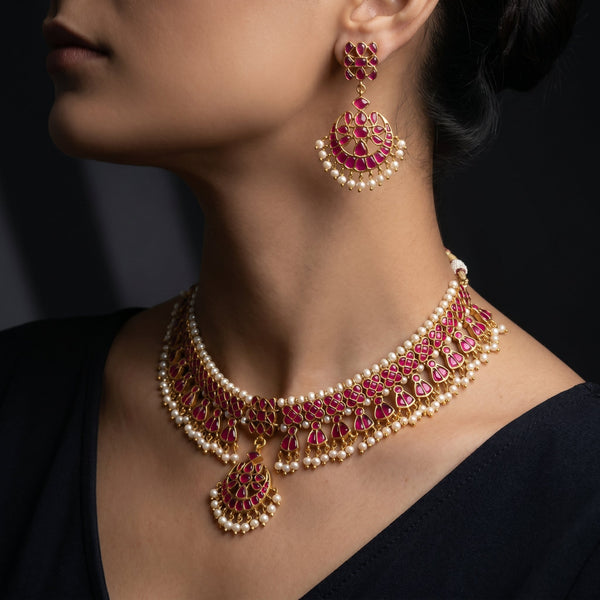
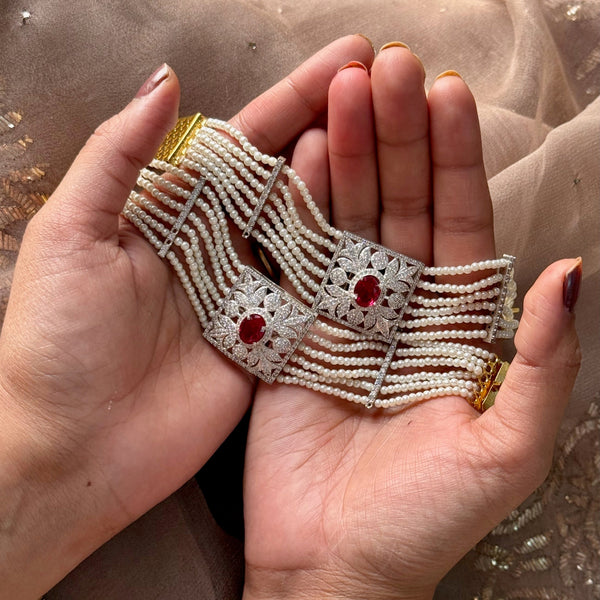
Gold-plated sterling silver Jadau Kundan with high-quality glass stones. Designed to carry the look and artisanal detail of traditional Jadau at an everyday price. This is what Rangtarini specialises in — traditional technique, contemporary wearability.
Important: A piece sold as "Polki" using Syndicate (glass) stones has no gemstone value. Always ask your jeweller to specify the stone type and get it documented.
Which Should You Choose — Polki, Kundan, or Jadau?
The honest answer is that these are not mutually exclusive choices. Most traditional Indian bridal sets combine all three. Here is how to think about it by occasion:
For a wedding trousseau
A Jadau Kundan set — whether in gold or gold-plated silver — covers all bridal occasions. The meenakari reverse makes it heirloom-worthy, and the Kundan setting gives that full, royal look in photographs. Explore bridal Jadau Kundan sets at Rangtarini.
For festive and daily wear
Sterling silver Kundan pieces are lighter, more forgiving, and easier to care for than gold Jadau. They pair beautifully with both traditional and Indo-western outfits. See our sterling silver collection.
For gifting
A single Kundan piece — a pair of earrings or a pendant — in gold-plated silver is a meaningful, lasting gift that carries the heritage of Rajasthani craft without the price of a full bridal set.
How to Care for Kundan and Jadau Jewellery
Regardless of which you own, the care rules are the same:
- Store each piece individually in a soft cloth pouch or butter paper — never loose in a box where pieces can scratch each other
- Keep away from moisture, perfume, and hairspray — apply these before putting on your jewellery, never after
- Never submerge in water, even to clean — wipe gently with a dry cotton cloth
- For meenakari-backed Jadau pieces, store flat — do not hang, as the enamel on the reverse can chip if pressed against a surface
Read our full guide: How to care for Kundan and Jadau jewellery — 8 rules every owner must know.
Frequently Asked Questions
Is Jadau the same as Kundan?
No. Kundan is the stone-setting technique — using 24-karat gold foil to grip stones into a gold frame. Jadau is the broader Rajasthani craft tradition that always uses the Kundan technique on the front but is defined by the addition of meenakari (enamel) work on the reverse. All Jadau uses Kundan; not all Kundan is Jadau.
What is the difference between Polki and Kundan?
Polki is a type of stone — specifically a raw, uncut diamond. Kundan is a setting technique that uses highly refined gold foil to set stones (including Polki) into a gold framework. A piece can be both Polki and Kundan — the Polki stone, set using the Kundan method.
Is Polki jewellery real diamond?
Natural Polki (called Syngandhi Polki) is a genuine, uncut diamond. However, much of the "Polki" jewellery sold in the market — especially at accessible price points — uses Syndicate Polki, which is a man-made glass stone designed to mimic the look of natural Polki. Always ask the jeweller and get the stone type specified in writing before purchasing.
Which is more valuable — Polki, Kundan, or Jadau?
Polki diamonds (natural, uncut) carry the highest gemstone value. The most valuable jewellery combines all three: a Jadau piece featuring natural Polki diamonds set in Kundan style with authentic meenakari reverse work in 22-karat gold. Pieces using glass stones and gold-plated metal are beautiful and accessible, but carry no intrinsic stone or precious metal value.
Can I wear Kundan jewellery daily?
Traditional heavy Kundan in pure gold is best reserved for special occasions. However, gold-plated sterling silver Kundan pieces — like those in the Rangtarini collection — are designed for everyday wear. Keep them away from water and perfume, and they will last for years.
Where is the best Jadau jewellery made in India?
Jaipur, Rajasthan, is the undisputed centre of Jadau Kundan jewellery. The city retains the largest concentration of craftspeople trained in all stages of the tradition — from gold framing and stone cutting to enamel work. Rangtarini jewellery is rooted in this Rajasthani heritage.
The Bottom Line
Three words. Three different things. Polki is the stone. Kundan is how it is set. Jadau is the living craft tradition of Rajasthan that brings them together — and adds meenakari on the reverse to make a piece that is as beautiful on the back as it is on the front.
Now that you know what you are looking at, browse with confidence. Explore the full Rangtarini collection — every piece is handcrafted in Rajasthan, made by artisans who carry this tradition forward.