Navratri 2026 Jewellery by Colour Day — What to Wear for All 9 Nights
Navratri 2026 begins October 11. Nine nights, nine colours, nine forms of the Goddess. Here is the complete jewellery guide — what each colour means and what to wear to honour it.

Navratri is nine nights of colour, devotion, and the particular joy of dressing with intention. Each day carries a specific colour — determined by the weekday and the form of Goddess Durga being honoured — and for many women, choosing the right jewellery to complete that colour is as much a part of the ritual as the puja itself.
Shardiya Navratri 2026 runs from Sunday, 11 October to Monday, 19 October. Vijayadashami (Dussehra) falls on Tuesday, 20 October. Below is the complete guide — every colour, every Goddess, and the jewellery that belongs with each.
Navratri 2026 — All 9 Colours at a Glance
| Day | Date | Colour | Goddess |
|---|---|---|---|
| Day 1 | Sunday, 11 Oct | Orange | Maa Shailputri |
| Day 2 | Monday, 12 Oct | White | Maa Brahmacharini |
| Day 3 | Tuesday, 13 Oct | Red | Maa Chandraghanta |
| Day 4 | Wednesday, 14 Oct | Royal Blue | Maa Kushmanda |
| Day 5 | Thursday, 15 Oct | Yellow | Maa Skandamata |
| Day 6 | Friday, 16 Oct | Green | Maa Katyayani |
| Day 7 | Saturday, 17 Oct | Grey | Maa Kalaratri |
| Day 8 | Sunday, 18 Oct | Purple | Maa Mahagauri |
| Day 9 | Monday, 19 Oct | Peacock Green | Maa Siddhidatri |
Day by Day — Colour, Meaning, and Jewellery
Day 1 · Sunday 11 Oct · Orange · Maa Shailputri
Orange opens Navratri — the colour of sacred fire, courage, and the energy of new beginnings. Maa Shailputri, daughter of the Himalayas, represents the grounded, unwavering aspect of the divine feminine. Orange is bold and warm, and the jewellery should match that energy.
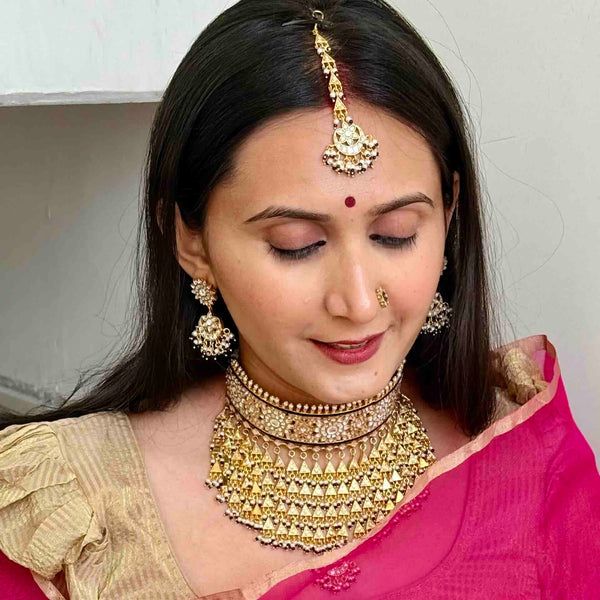
What to wear: Gold-plated statement pieces complement orange outfits — the warmth of gold echoes the colour naturally. A Kundan maang tikka with warm-toned stones, or a gold-plated choker with orange or coral meenakari work, sits beautifully against a deep orange chaniya choli or Banarasi. Avoid cool silver tones on Day 1 — they work against the warmth of the colour. Gold-plated Kundan sets →
Day 2 · Monday 12 Oct · White · Maa Brahmacharini
White is the colour of purity, stillness, and inner discipline. Maa Brahmacharini walks the path of austerity and devotion. The colour calls for restraint in dressing — not minimal, but considered and clean.
What to wear: Sterling silver jewellery is the natural choice for white — the cool brilliance of silver against white fabric is one of the most elegant combinations in Indian dressing. A silver Kundan set with white stones or clear glass, or lightweight silver jhumkas with delicate filigree work, honours both the colour and the Goddess. Pearl-tone pieces also work beautifully. Keep the silhouette refined rather than heavy. Sterling silver jewellery →
Day 3 · Tuesday 13 Oct · Red · Maa Chandraghanta
Red is the most traditional colour of Navratri — fierce, auspicious, and deeply embedded in the visual language of Indian celebration. Maa Chandraghanta, the warrior Goddess, carries a crescent moon on her forehead and rides a tigress. This is the day for full bridal energy.
What to wear: A complete Jadau Kundan set — necklace, earrings, maang tikka — in gold with red meenakari detailing on the reverse. Red outfits absorb colour and can dominate; jewellery needs weight and richness to hold its own. If a full set feels too heavy, a statement Kundan necklace with gold jhumkas carries the same intention at a lighter load. A Rajasthani Borla maang tikka is particularly fitting on Day 3. Jadau Kundan sets →
Day 4 · Wednesday 14 Oct · Royal Blue · Maa Kushmanda
Royal blue is the colour of cosmic energy and creation. Maa Kushmanda is believed to have created the universe from the warmth of her smile. This is a bold, confident colour that rewards jewellery with equal presence.
What to wear: Kundan pieces with blue stone accents — sapphire-tone or tanzanite-tone settings — create a beautiful tonal dialogue with a royal blue outfit. Blue meenakari Jadau pieces, where the enamel on the reverse uses deep lapis blues, are particularly significant on this day. Silver with blue stones also works for a more contemporary styling. The key is contrast — royal blue outfits can carry heavier jewellery without being overwhelmed. Kundan jewellery →
Day 5 · Thursday 15 Oct · Yellow · Maa Skandamata
Yellow is the colour of optimism, wisdom, and warmth. Maa Skandamata — mother of Kartikeya — embodies nurturing strength. Yellow outfits, from soft mustard to vibrant turmeric, are among the most versatile in the Navratri palette.
What to wear: Gold-plated jewellery shines on yellow — the tones are adjacent and create a luminous, cohesive look rather than contrast. Pieces with yellow citrine or amber-tone stones reinforce the palette deliberately. For a mustard or ochre outfit, a heavier gold Kundan necklace with layered jhumkas keeps the richness of the look intact. For bright yellow, lighter and more delicate gold-plated pieces prevent the look from becoming too heavy.
Day 6 · Friday 16 Oct · Green · Maa Katyayani
Green is the colour of nature, growth, and new beginnings. Maa Katyayani, the most fierce warrior form of Durga, is worshipped by women seeking strength and auspicious partnerships. Green is one of the richest colours to dress in during Navratri.
What to wear: Emerald-tone Kundan jewellery is the classic pairing for green — the green stones in the pieces echo the outfit and create a layered depth that solid-colour jewellery cannot achieve. Jadau sets with green and white stone work, or pieces featuring parrot-green meenakari enamel, are particularly fitting. Silver with green stone accents works for a lighter interpretation. This is also a strong day for hathphool — the traditional hand jewellery — if you are wearing a full Rajasthani look.
Day 7 · Saturday 17 Oct · Grey · Maa Kalaratri
Grey is the most underestimated colour of Navratri. It represents balance, composure, and the grounding of strong emotions. Maa Kalaratri is the most fearsome form of Durga — dark, powerful, and ultimately protective. Grey allows for some of the most elegant Navratri styling.
What to wear: Oxidised silver jewellery finds its natural home on Day 7. The dark, antique finish of oxidised silver against grey fabric creates a sophisticated, tonal look that is contemporary and traditional simultaneously. A heavy oxidised silver necklace with matching jhumkas and silver cuffs works brilliantly. Alternatively, bright gold-plated Kundan against grey creates sharp contrast — a deliberate, striking choice. Both approaches honour the day. Oxidised silver jewellery →
Day 8 · Sunday 18 Oct · Purple · Maa Mahagauri
Purple carries the weight of Navratri's penultimate night. Maa Mahagauri, representing purity and serenity that emerges after great austerity, is one of the most benevolent forms of the Goddess. Purple — from soft lavender to deep royal violet — is the colour of dignity and spiritual depth.
What to wear: This is the night for your most significant jewellery. Ashtami is considered one of the two most auspicious nights of Navratri (alongside Navami), and many women save their best pieces for Day 8 and Day 9. A full Jadau Kundan bridal set in gold with purple amethyst-tone stones, or pieces with purple and white meenakari work, completes a deep purple lehenga or sharara with full ceremonial intention. Maang tikka, nath, and Kundan earrings together — this is the night to wear everything. Bridal Jadau Kundan sets →
Day 9 · Monday 19 Oct · Peacock Green · Maa Siddhidatri
Peacock green closes the nine nights — and it is the most layered colour of them all. Neither the cool green of Day 6 nor the blue of Day 4, it sits at their intersection: the exact colour of the peacock's neck feathers, the symbol most associated with divine beauty and completeness in Indian iconography. Maa Siddhidatri is the Goddess of all siddhis — perfections and attainments. The final night deserves the finest expression.
What to wear: Multicolour Jadau Kundan jewellery reaches its full potential on Navami. The meenakari enamel work on a traditional Jadau piece — using blues, greens, whites, and reds simultaneously — mirrors the exact complexity of peacock green. A statement necklace with rich colour-work, paired with gold jhumkas and a Borla or Matha Patti for the hair, honours both the colour and the occasion appropriately. If you wear one full Jadau set across all nine nights, Navami is the night to wear it. Jadau Kundan for Navami →
A Few Practical Notes
Garba and Dandiya nights call for lighter jewellery. If you are dancing — and you should be — stud earrings rather than jhumkas prevent catching, and necklaces that sit close to the neck rather than swinging pendants stay comfortable across hours of movement. Save the heavier sets for puja and darshan; scale down for the dance floor.
Mix metals thoughtfully. Gold-plated and silver pieces can coexist beautifully across Navratri — the festival's palette changes daily and neither metal owns it. The rule is internal consistency within a single look: pick one metal per outfit rather than mixing both.
Care after nine nights of wear. Festive wear accumulates sweat, perfume, and handling. After Navratri, wipe every piece with a dry cotton cloth before storing, and give each piece its own pouch. Nine consecutive days of wear is meaningful stress for any jewellery — a clean storage after makes the difference between pieces that last and pieces that tarnish by Diwali. Full jewellery care guide →
Frequently Asked Questions
Are the Navratri colours the same every year?
No — the colours change each year because they are determined by which day of the week each Navratri day falls on. Since Navratri starts on a different weekday each year, the colour sequence shifts accordingly. The dates and colours listed above are specific to Shardiya Navratri 2026.
Which is the most important day of Navratri for jewellery?
Ashtami (Day 8) and Navami (Day 9) are considered the most auspicious nights and traditionally warrant the most significant jewellery. In many families, the full bridal or heirloom set is reserved specifically for these two nights.
Can I wear silver jewellery on days that call for gold?
Yes. The colour of the day refers to your outfit, not strictly to the metal of your jewellery. Silver against orange, red, or yellow can be worn intentionally as contrast rather than complement — it is a valid choice. The tradition is about wearing the colour, not about matching every element to it.
What jewellery is appropriate for Garba nights?
Lightweight pieces that do not swing or catch: close-fitting necklaces, stud or small hoop earrings, thin bangles rather than heavy cuffs. Many women wear their full set for the puja at the beginning of the evening and switch to lighter pieces for the dancing. Both approaches are entirely appropriate.
Nine nights, nine colours, nine forms of the Goddess. Dressing with intention across all of them is one of the most joyful expressions of what Navratri actually is — not just festival wear, but a daily act of devotion through beauty. Explore Rangtarini's festive jewellery collection →